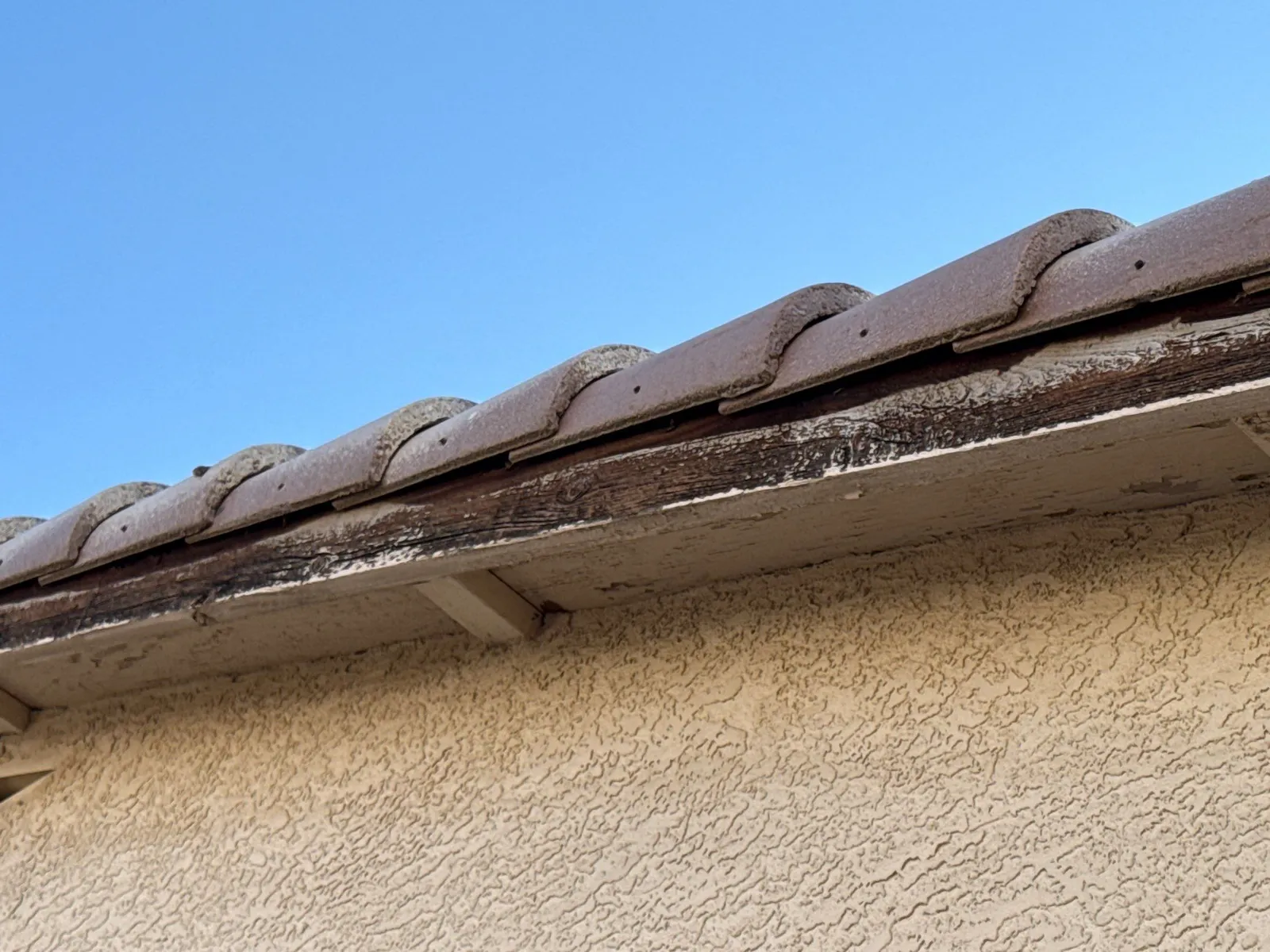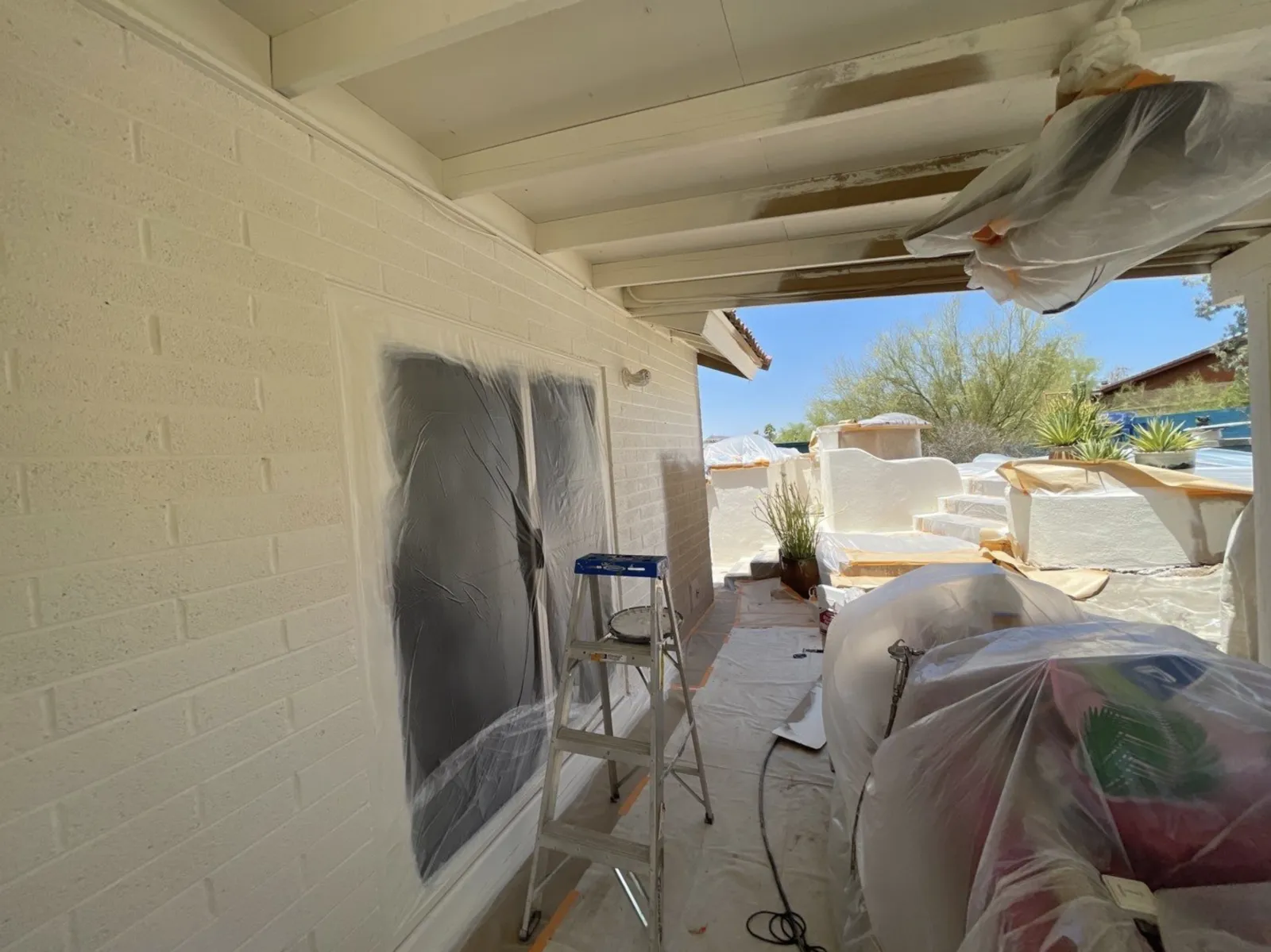
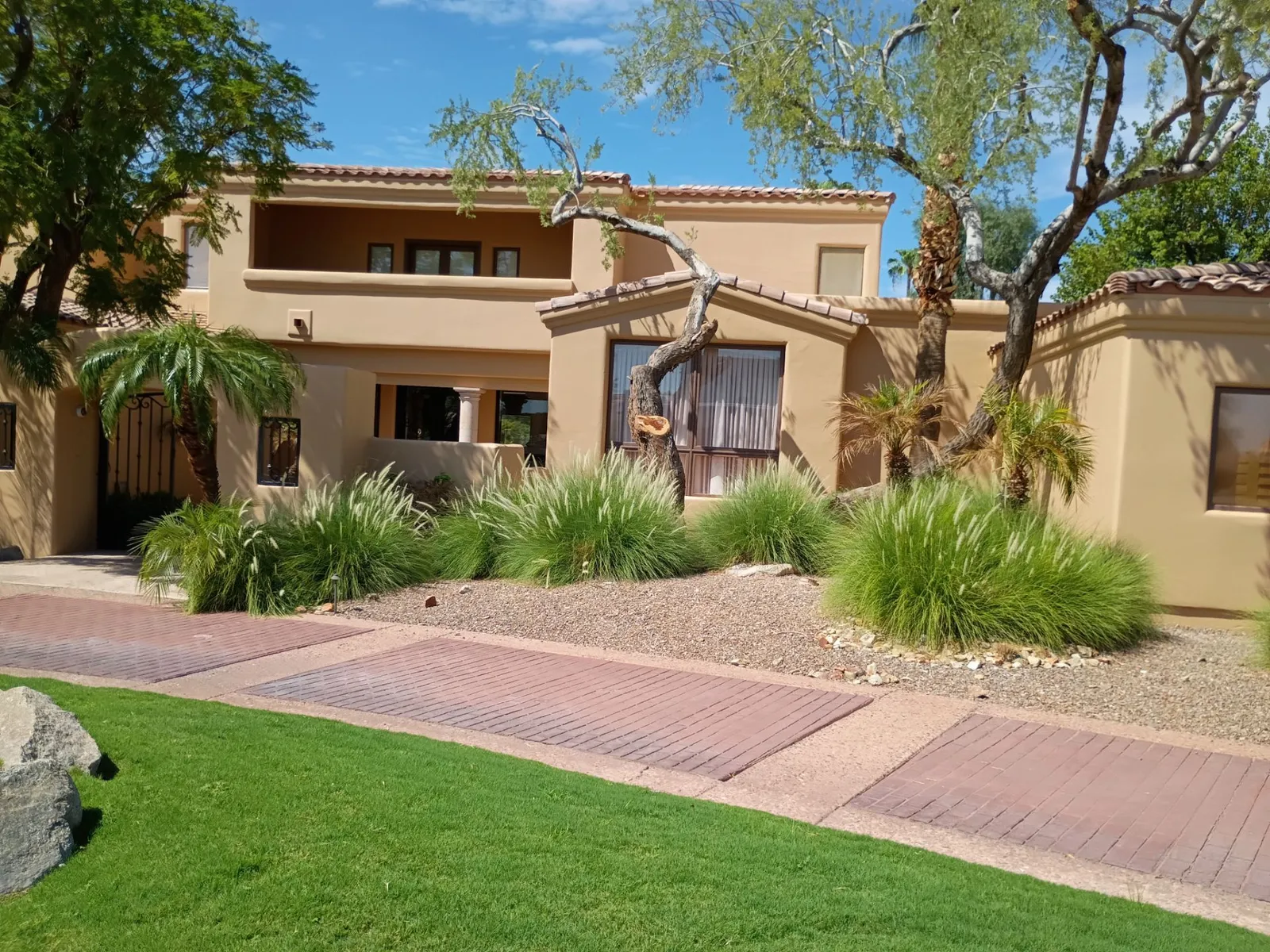
LRV, or light reflectance value, is a number from 0 to 100 that tells you how much visible light a paint color reflects. Zero is absolute black. 100 is pure white. The higher the number, the lighter the color looks and the less sun it soaks up.
Some HOAs write an LRV range into their color rules, so every house on the street stays within a set band of light and dark. In Arizona, that number also changes how hot your walls get and how fast the color fades.
What is LRV in paint?
LRV stands for light reflectance value. You'll also hear it called light reflective value; both mean the same thing. It's printed on most paint color cards and manufacturer color pages, usually as a number next to the color name.
As our guide to cooling your home with exterior paint explains, LRV is a 0 to 100 scale for how much visible light a color reflects. Here's how the range roughly breaks down on a house:
| Range | Typical LRV | How it behaves in Valley sun |
|---|---|---|
| Light | 60 to 90+ | Coolest walls, slowest visible fading |
| Mid-tone | 30 to 55 | In between; depends a lot on the paint |
| Dark | Under 30 | Hottest walls, fades visibly first |
Why your HOA limits LRV
Some HOA guidelines don't just list approved colors. They set an LRV range, so you can choose any color as long as its number falls inside it. One homeowner told us: "as part of my agreement, it says that I can choose a color be with an L, R, V of 7 to 67."
Each HOA writes its own rules, so check your community's CC&Rs and design guidelines for the exact range and anything it excludes. A range keeps the street from getting too stark or too dark, and in a hot climate the lighter end of it lines up with what holds up best on a wall.
Our HOA painting help starts with pulling your approved palette, so you know your limits before you fall for a color.
What LRV changes in Arizona sun
In the Valley, LRV isn't just about looks. It affects two things you'll notice for years.
Heat
A dark wall absorbs more sunlight and gets hotter. Our guide to desert exterior colors that beat Arizona heat covers which tones stay cooler. One homeowner learned that the hard way: "We had no idea the color would absorb as much of the sunshine as it does." They were repainting in a white with a much higher LRV.
Fading
Dark colors show fading sooner, and it comes up regularly when our team talks colors with homeowners. On one call, about a dark brown with an LRV around 10: "three years, you're going to start seeing fade." On another, about a light color near 75: "a dozen years from now, it's going to look exactly the same."
How to pick a color within your HOA's LRV range
- 1Get the current HOA guidelines and find the LRV range, if there is one.
- 2Look up the LRV of each color you like on the color card or the paint maker's site.
- 3Lean toward the higher end of your range for the body color, especially on west and south walls.
- 4Use darker colors for trim, doors and accents, where there's less surface in the sun.
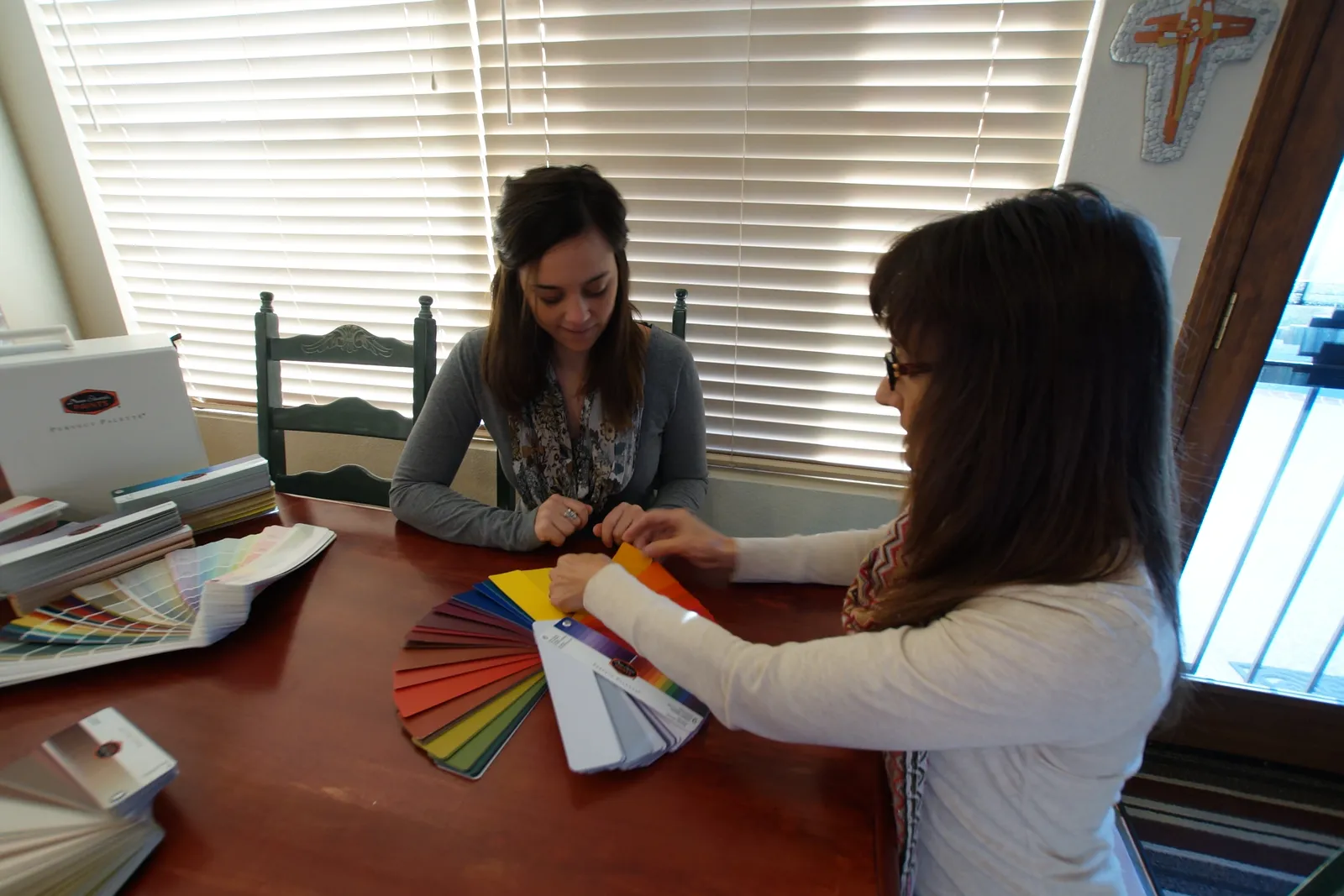
- 5Use peel-and-stick samples instead of painting a test patch on your stucco. Move them from wall to wall and look at them in morning light, afternoon glare and shade.
- 6Submit the exact color names and codes to your HOA and wait for the written approval before painting.
If you'd rather not do the legwork, we get your approved palette wherever the HOA lets us, help you choose from it and walk you through the submittal. Your approved color goes in writing on your proposal, and we don't start until it's settled. Our Color & HOA Standard spells out how that works, and our guide to choosing HOA-approved exterior colors covers the rest of the approval process.
In Scottsdale and the rest of the Phoenix side of the Valley, our Phoenix office will walk your home with you, go over colors in your HOA's range, and put the price in writing on the spot, with no deposit.
Questions
Choosing colors inside your HOA's range?
Call (602) 540-7471 or request a free proposal. We'll put the price in writing on the spot, with no deposit.
Written by
Mike Ricker
Mike Ricker writes for Crash of Rhinos Painting & Garage Floors.