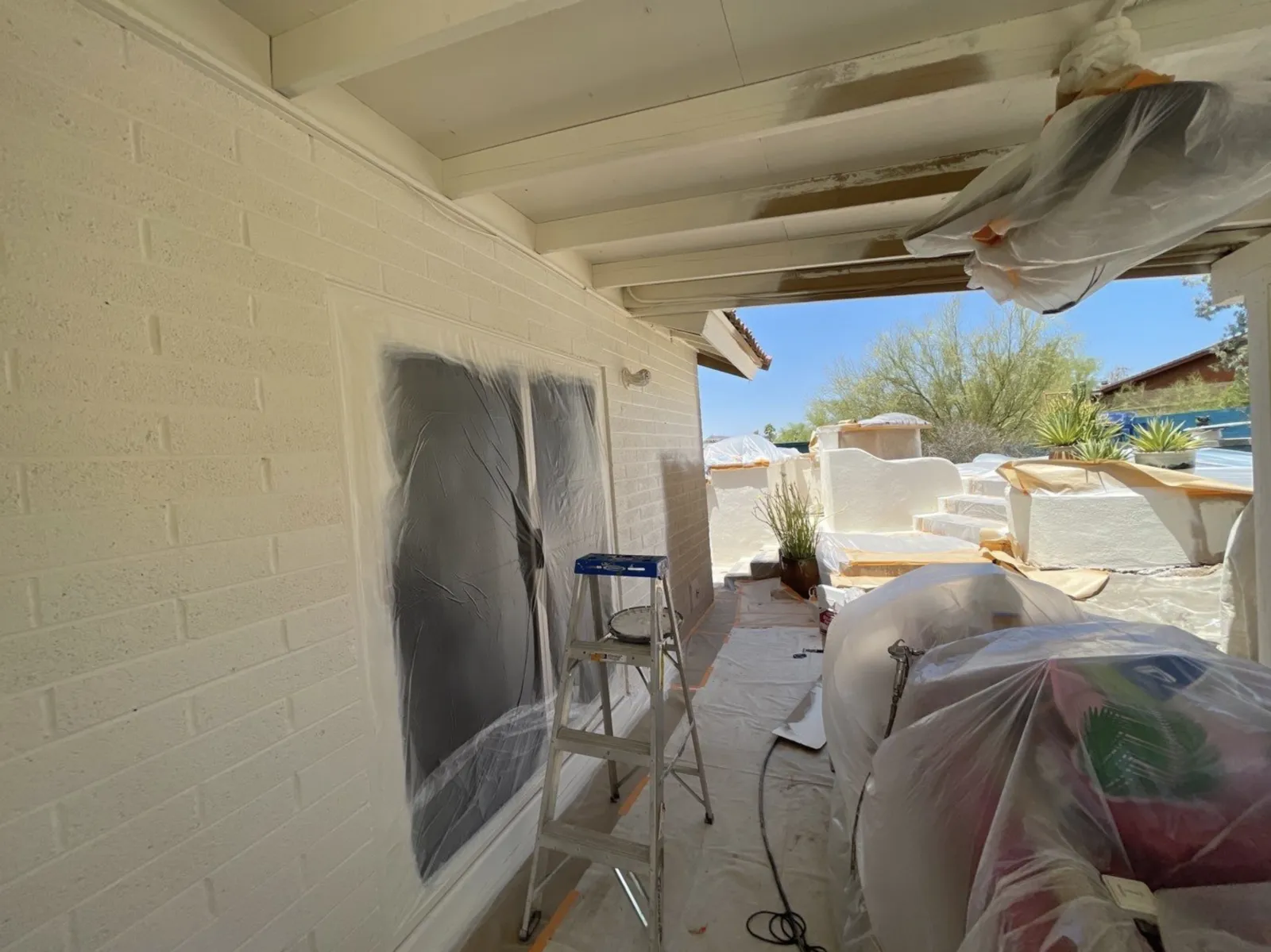
Can you paint just the trim on your house?
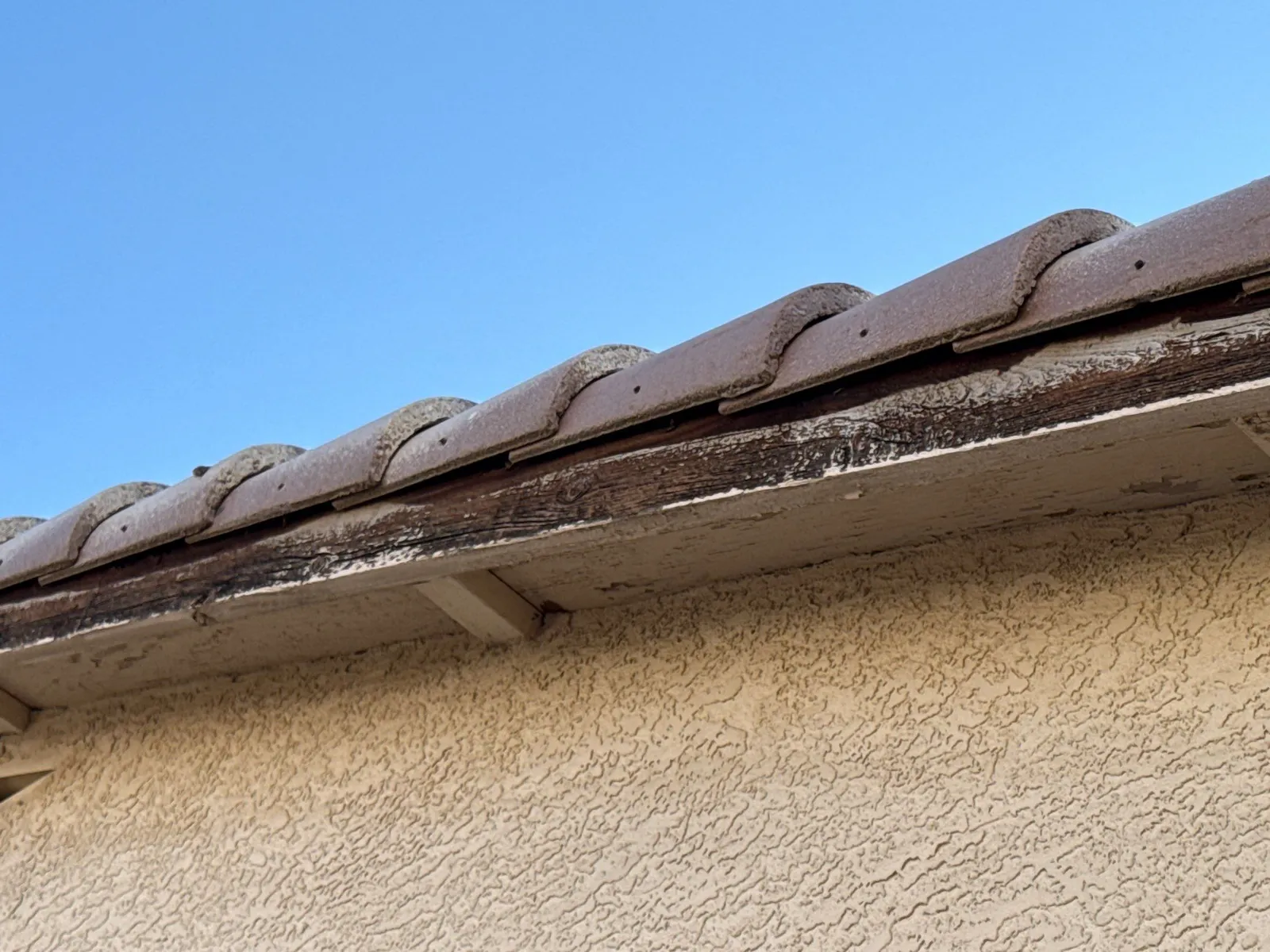
Yes. Painting exterior trim on its own is a normal job: the fascia, eaves, window and door trim, and other wood or metal pieces get washed, repaired, primed where bare, and painted, while the stucco stays as it is.
It works best when the stucco is still in good shape. If the body of the house is faded too, painting the trim alone can make the walls look older by comparison.
Why exterior trim fades before the stucco
Trim is usually wood or metal with a smooth face, and it takes direct sun and rain on every edge. Fascia boards along the roofline get the worst of it. Stucco is thick, textured and porous, so it hides wear longer. That's why the trim often looks tired years before the walls do.
Homeowners describe it in the same words. One wrote: "I'm getting estimates to have the trim on our house painted. It's two story and it really needs painted bad. It's really faded." Another said: "My trim being painted in my house again. It's been six years, it's faded and just some other odds and ends."
When painting just the trim makes sense
Painting only the trim is a good fit when:
- The stucco is still a solid color with no peeling or chalky spots
- The trim is peeling or faded but the wood underneath is still firm
- You're keeping the same trim color, or a new one your HOA allows
- You want to stretch the time before a full repaint
It's less of a fit when the body is faded too. One homeowner asked for "fascia, soffits, and all trim painted. Possibly front of home as stucco is sun faded in that area as well." In that case it's usually better to look at the whole house, so the fresh trim isn't framing tired walls. Our exterior house painting covers the full house, trim included.
If you're changing the trim color, our post on how to select exterior trim colors can help you narrow it down.
Check the wood before you paint it
Paint can only protect wood that's still sound. Our Crack & Repair Standard puts it simply: once wood starts to go, it tends to keep going, no matter the coating. The test is a probe pressed into the suspect spot. Sound wood resists; failing wood gives way.
Here's how trim gets handled under that standard:
- Sound wood with weathering: sanded, bare spots primed, gaps caulked, then coated.
- Peeling paint on sound wood: scraped to a sound edge, feather-sanded, bare wood primed, then coated.
- Open joints or loose boards on sound wood: re-secured, splits filled, joints caulked, then primed and painted.
- Rotted or soft wood: not painted over. It's replaced as a separate item, or left out and noted, and you decide.
One homeowner asked about "Repaint exterior trim—currently peeling." Peeling on its own is fixable. Soft wood under the peeling is a different job.
How exterior trim gets painted
Whether you do it yourself or hire it out, the steps are the same:
- 1Wash the trim to remove dirt and chalky old paint, then let it dry.
- 2Scrape loose paint and sand the edges smooth.
- 3Probe the wood and repair or replace anything soft.
- 4Prime bare wood and metal. Our Surface Preparation Standard calls for a bonding primer on bare wood and fascia, and a high-build binding primer where paint is peeling on eaves and OSB.
- 5Caulk open joints, like around door trim. Rafter tails and eave junctions aren't caulked shut.
- 6Apply the finish coats.
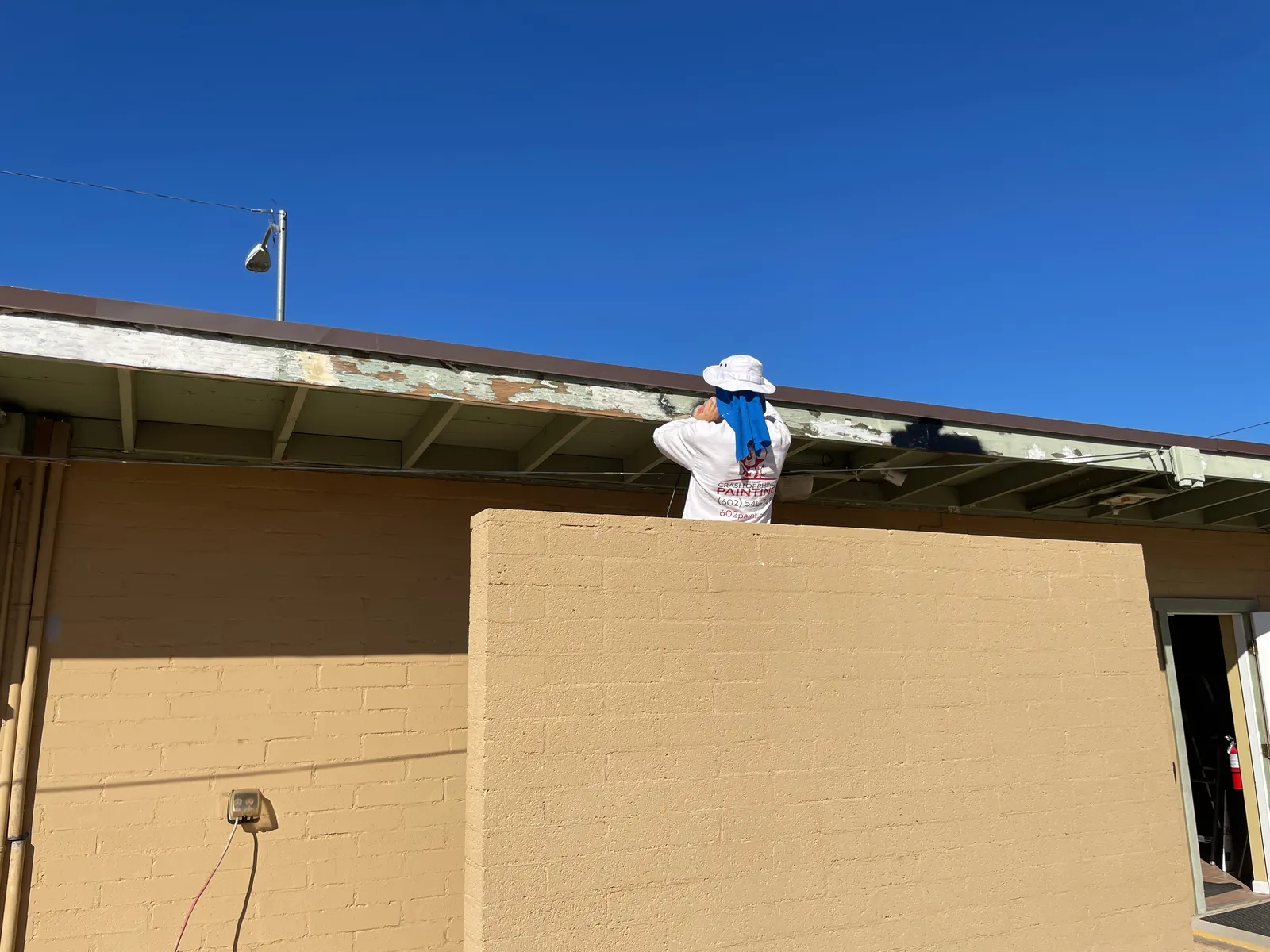
Trim work means ladders, a lot of edges and careful lines against the stucco. A single-story house with short runs of trim can be a weekend project. Two-story fascia, a lot of eaves, or soft wood that needs replacing is where hiring it out pays off.
Our written warranty runs 5 years on wood and metal and 2 years on OSB eaves, and you get it in writing at the final walk-through. See the Surface Preparation Standard for the full primer list.
In Queen Creek and across the East Valley, our Gilbert office will look at your trim with you, show you any wood that needs repair, and put the price in writing on the spot, with no deposit.
Questions
Trim faded or peeling?
Call (602) 540-7471 or request a free proposal. We'll put the price in writing on the spot, with no deposit.
Written by
Mike Ricker
Mike Ricker writes for Crash of Rhinos Painting & Garage Floors.