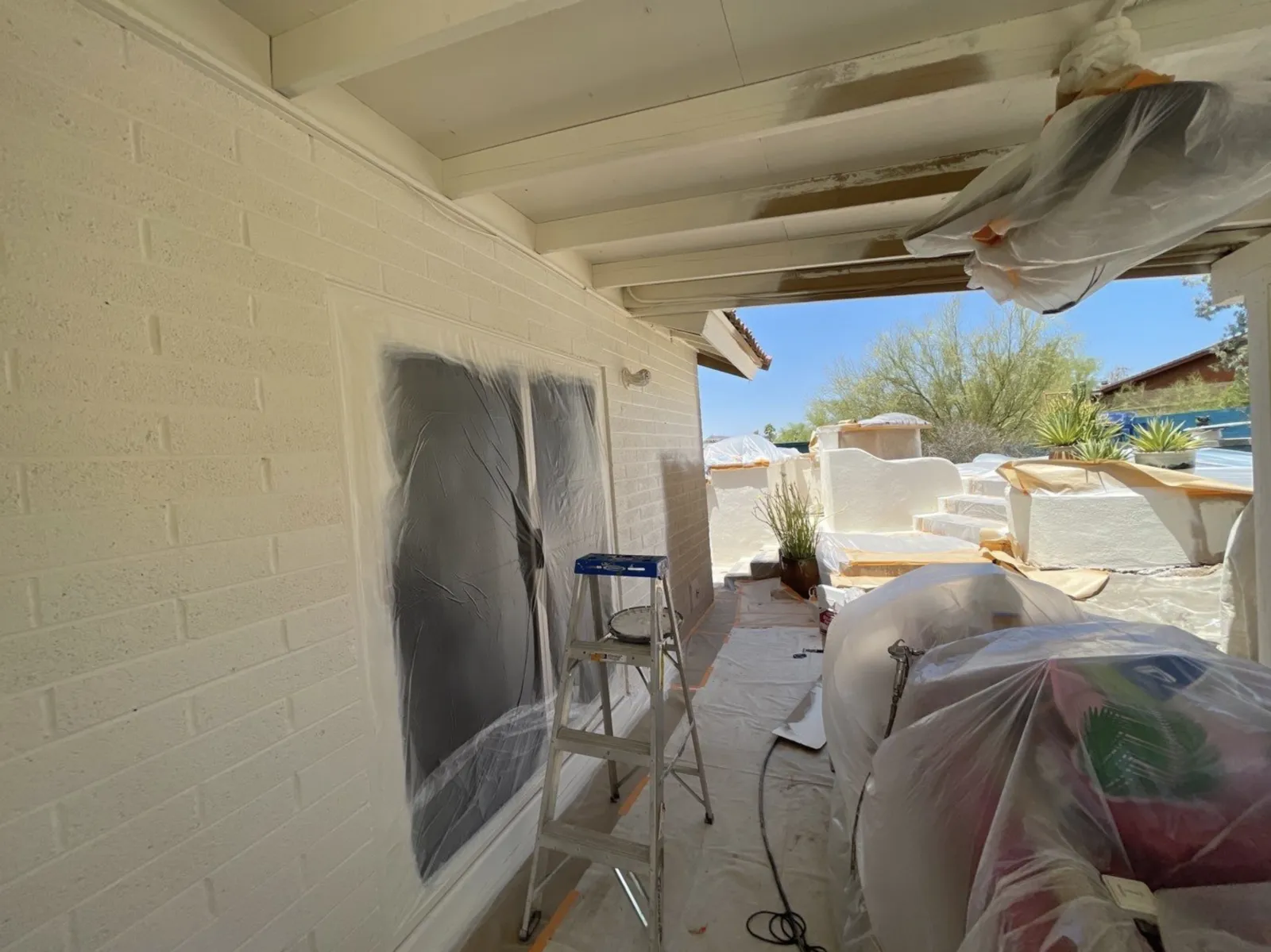
What is a stem wall, and why does the paint on it peel?
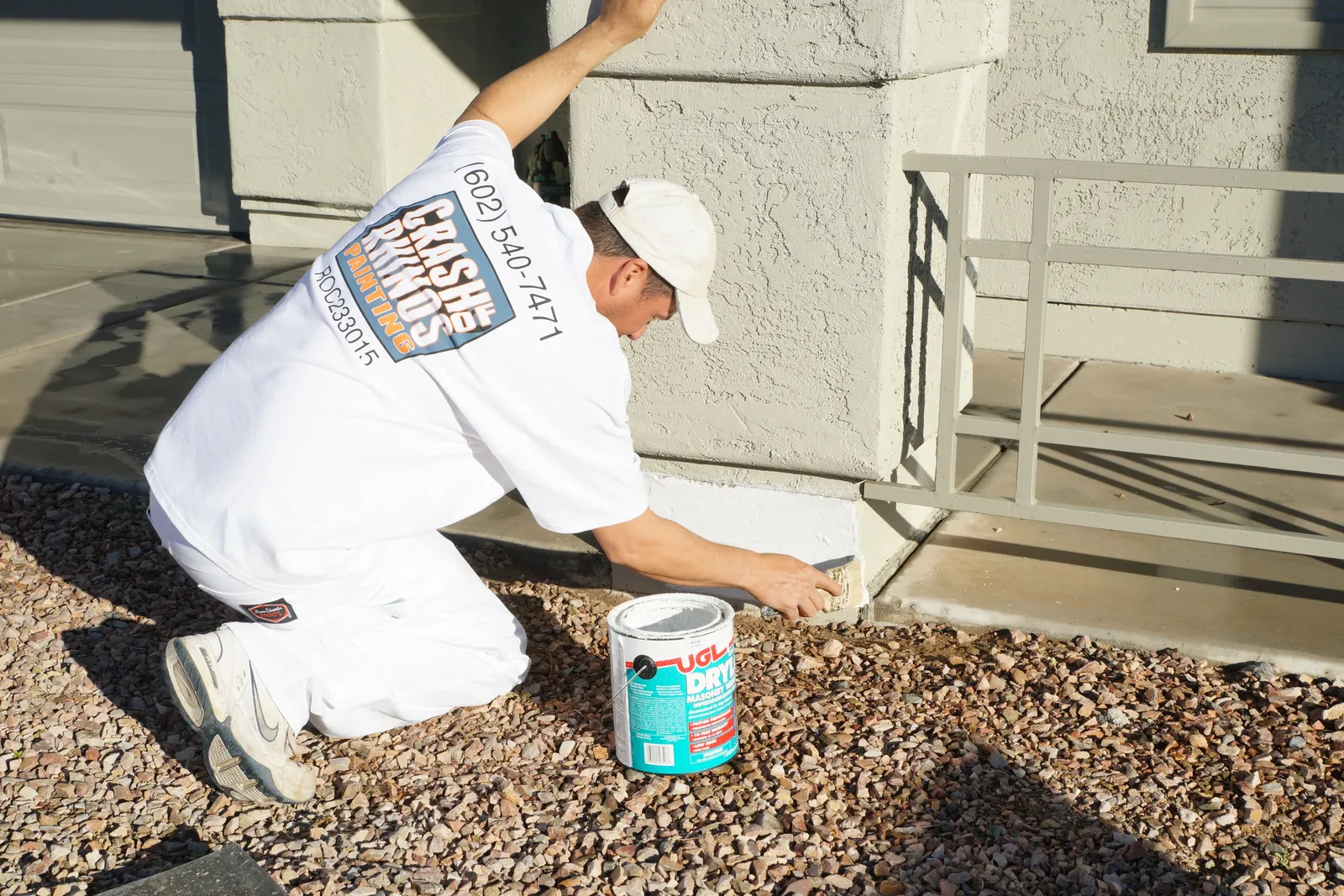
A stem wall is the short band of concrete or block at the bottom of your house, between the ground and where the stucco starts. It's part of the foundation, and it holds the walls of the house up off the dirt.
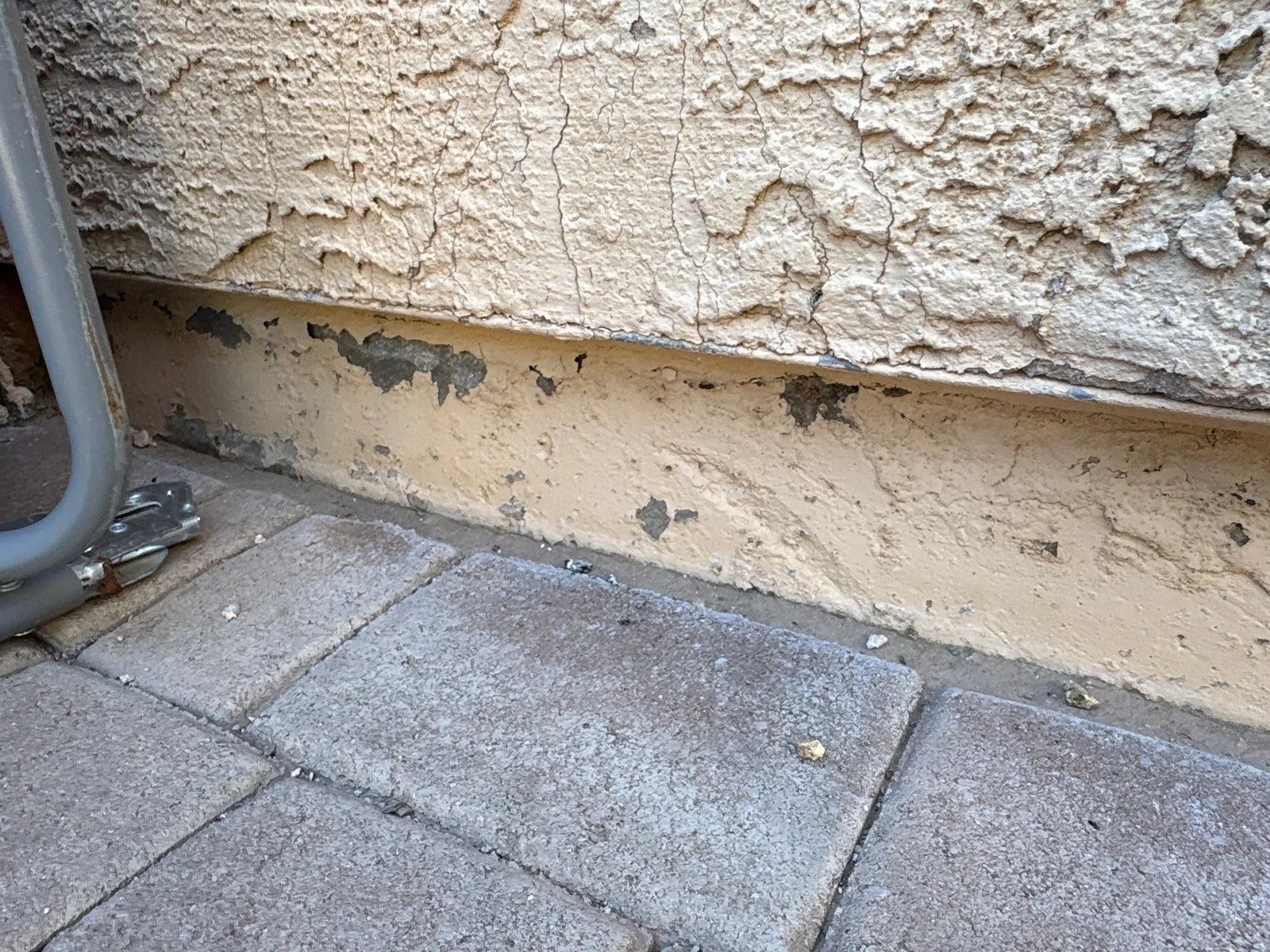
Paint peels there first because the stem wall gets wet far more than the wall above it: sprinkler spray, rain splashing off gravel, and soil sitting against it. Painting over it without sealing it first usually means it peels again.
What is a stem wall?
A stem wall is a short wall of poured concrete or concrete block that sits on the footing, below ground, and rises a little above the soil. The walls of the house are built on top of it. On a stucco home in the Valley, it's the plain band you see between the gravel or dirt and the bottom edge of the stucco.
Our Crack & Repair Standard describes it as the short masonry band where your home meets the ground, and notes that it lives a harder life than the wall above it.
Why the paint on a stem wall peels first
Water. The stem wall is the part of the house closest to everything wet in the yard:
- Sprinklers and drip lines that hit the bottom of the wall
- Rain and hose water splashing up off gravel and pavers
- Soil, mulch or planters piled against it that stay damp
- Water that drains toward the house instead of away
Concrete and block soak up water. When it dries out through the painted face, it carries salts with it and pushes the paint off from behind. A National Institutes of Health facilities bulletin notes that persistent or repeated white salt deposits may indicate too much moisture inside the masonry. That white crust is a good clue the paint didn't fail on its own.
When someone calls about peeling paint, one of the first things we ask is where it's peeling. As our owner asked one caller: "Is it down stem wall? Is it on the main body of the house?"
Signs the problem is the stem wall
- Paint peeling in a band along the bottom of the house while the stucco above looks fine
- White, chalky crust on the stem wall or on the ground below it
- Peeling that's worst where sprinklers spray or where planters sit
- Flakes or bubbles that came back after a touch-up
What you can do before anyone paints
Most of the cause is outside the wall, so start there. These steps cost little:
- 1Turn on the sprinklers and watch where they land. Move or adjust any head that sprays the house.
- 2Pull soil, mulch and gravel back so they don't pile up against the wall.
- 3Check that the ground slopes away from the house, not toward it.
- 4Let the wall dry out, then brush or scrape off loose flakes and salt.
- 5Hold off on touch-up paint. Paint over damp, salty masonry usually peels again.
Heads up
How a stem wall gets sealed and painted
Because the stem wall takes the most water, it gets its own steps on every exterior job we do, separate from the stucco above it. From our Crack & Repair Standard:
- 1Pressure wash the house, stem wall included.
- 2Scrape the stem wall to remove loose and failing material.
- 3Make minor cosmetic repairs with a repair material made for masonry.
- 4Coat every stem wall with DRYLOK® EXTREME masonry waterproofer, all of it, not just the spots that look thirsty.
- 5Paint over that sealed, water-resistant base.
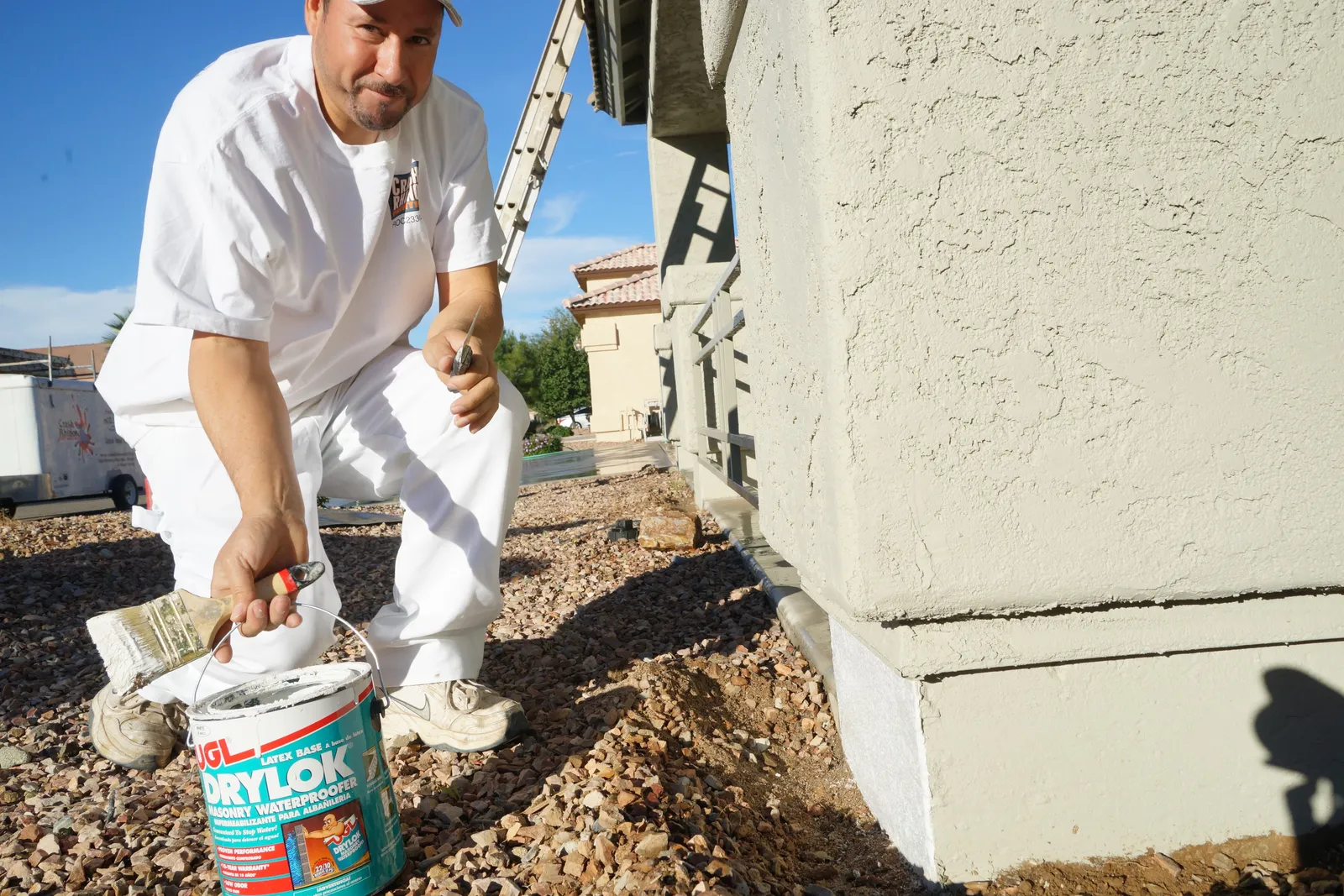
The waterproofer is the step most people skip. Without it, the paint is the only thing standing between the masonry and the water, and it loses.
When a crack is more than cosmetic
Cracks get measured before anything is filled. Under our standard, any crack wider than about 1/4 inch, or one showing displacement, stair-stepping or offset edges, means we stop. We don't paint over it. We flag it and explain what we see first. Smaller cracks in the stucco above the stem wall are repaired, textured to match, primed and painted.
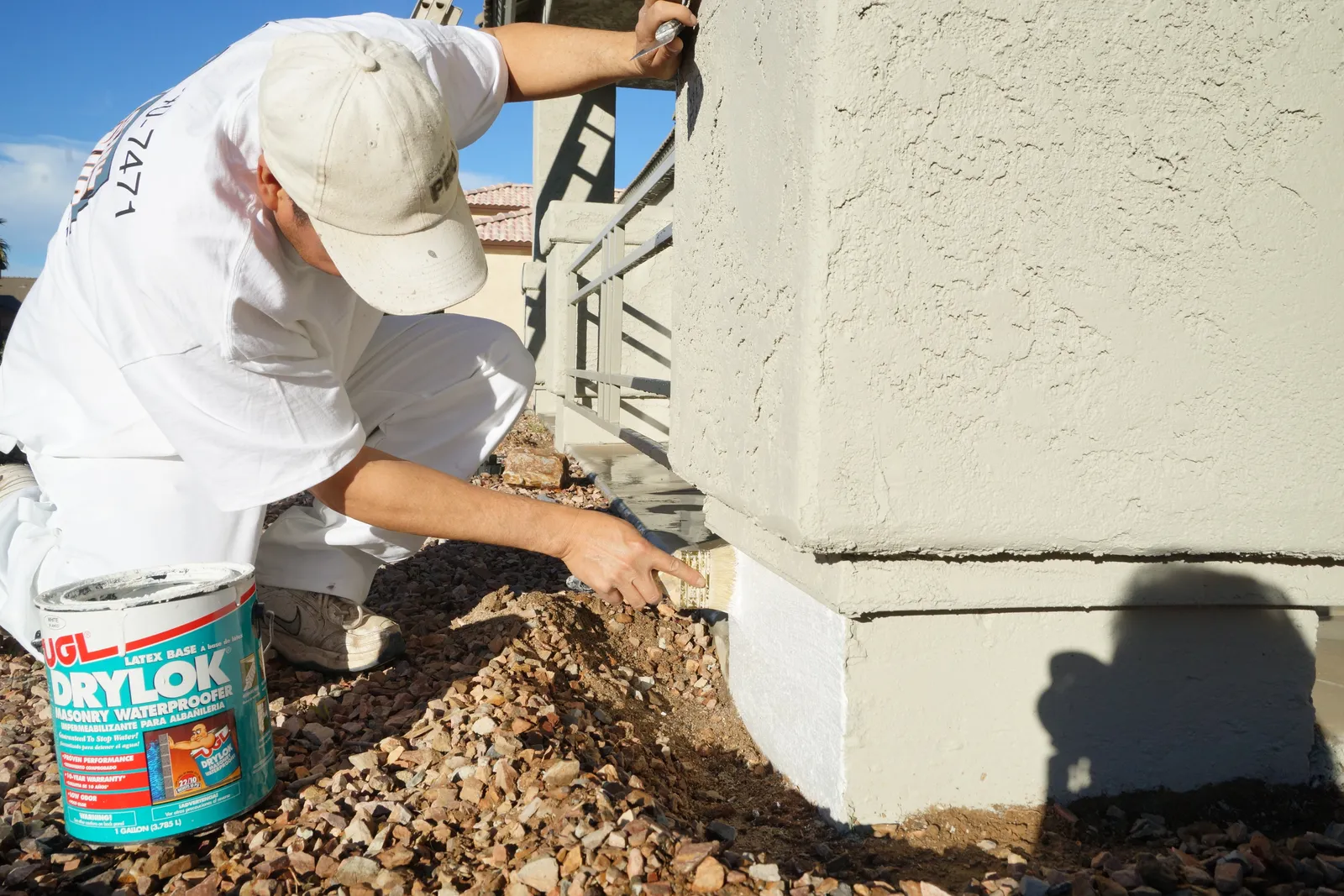
Painting the stem wall after foundation repair
Foundation work often leaves the stem wall patched and bare. Homeowners call us right after: "Having stem wall foundation repair work done on my home. I need the stem wall sealed and painted." Another wrote that they "had the stem wall spalling and cracks repaired. We need the exposed areas painted."
Fresh patches soak up paint differently than the old wall, so they need the same order: clean, seal, then paint. We can seal and paint just the stem wall after foundation repair, without repainting the whole house. Give the repair time to cure before it's sealed, and ask whoever did the foundation work how long that should be.
In Glendale and the rest of the West Valley, our Phoenix office will walk the stem wall with you, show you what it needs, and put the price in writing on the spot, with no deposit. If the paint is also failing higher up the wall, read why paint peels on stucco homes.
Questions
Paint peeling at the bottom of your house?
Call (602) 540-7471 or request a free proposal. We'll put the price in writing on the spot, with no deposit.
Written by
Mike Ricker
Mike Ricker writes for Crash of Rhinos Painting & Garage Floors, serving the Valley since 2006 with our own W-2 crews.