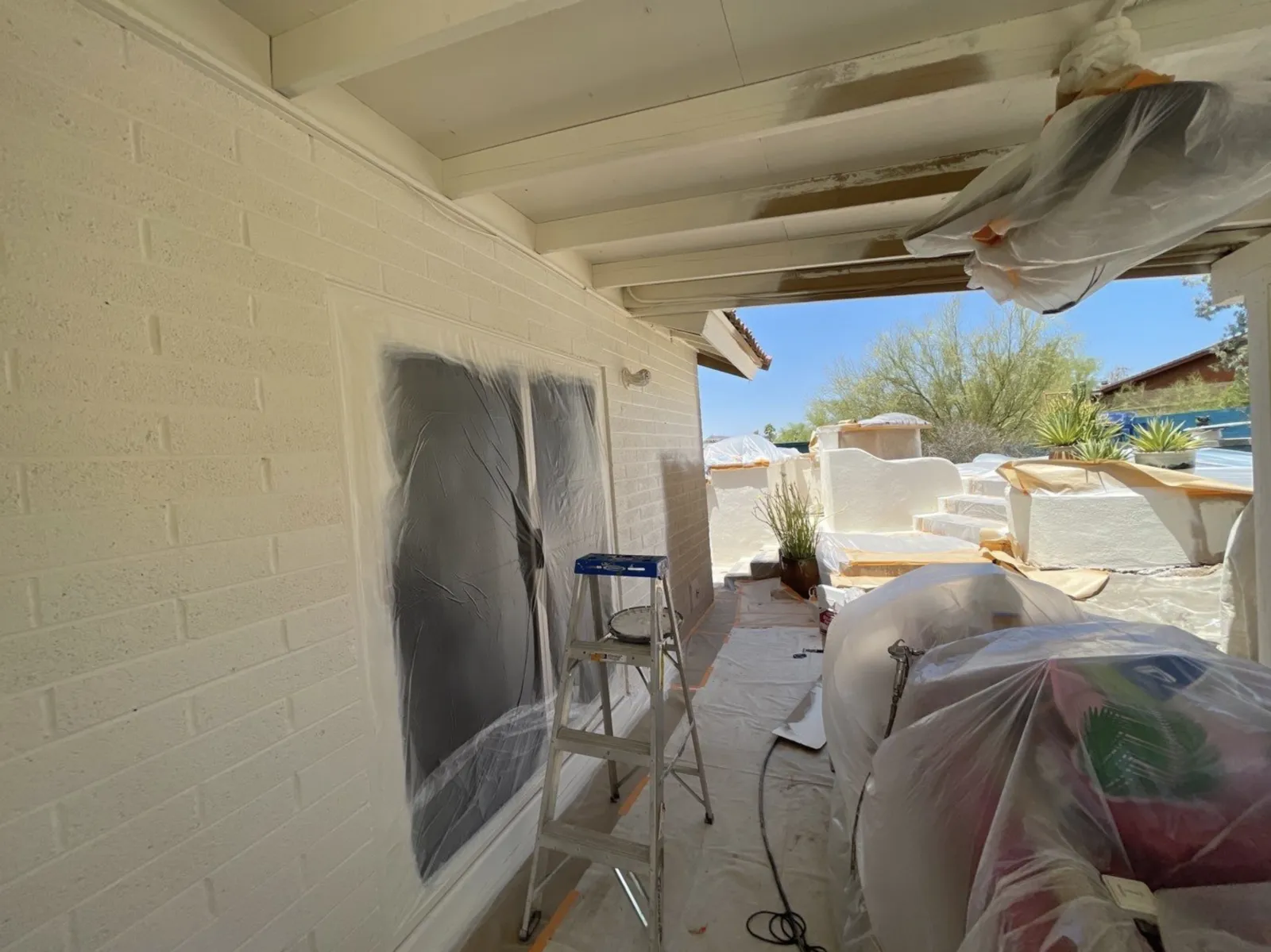
Why is the paint bubbling at the bottom of my stucco wall?
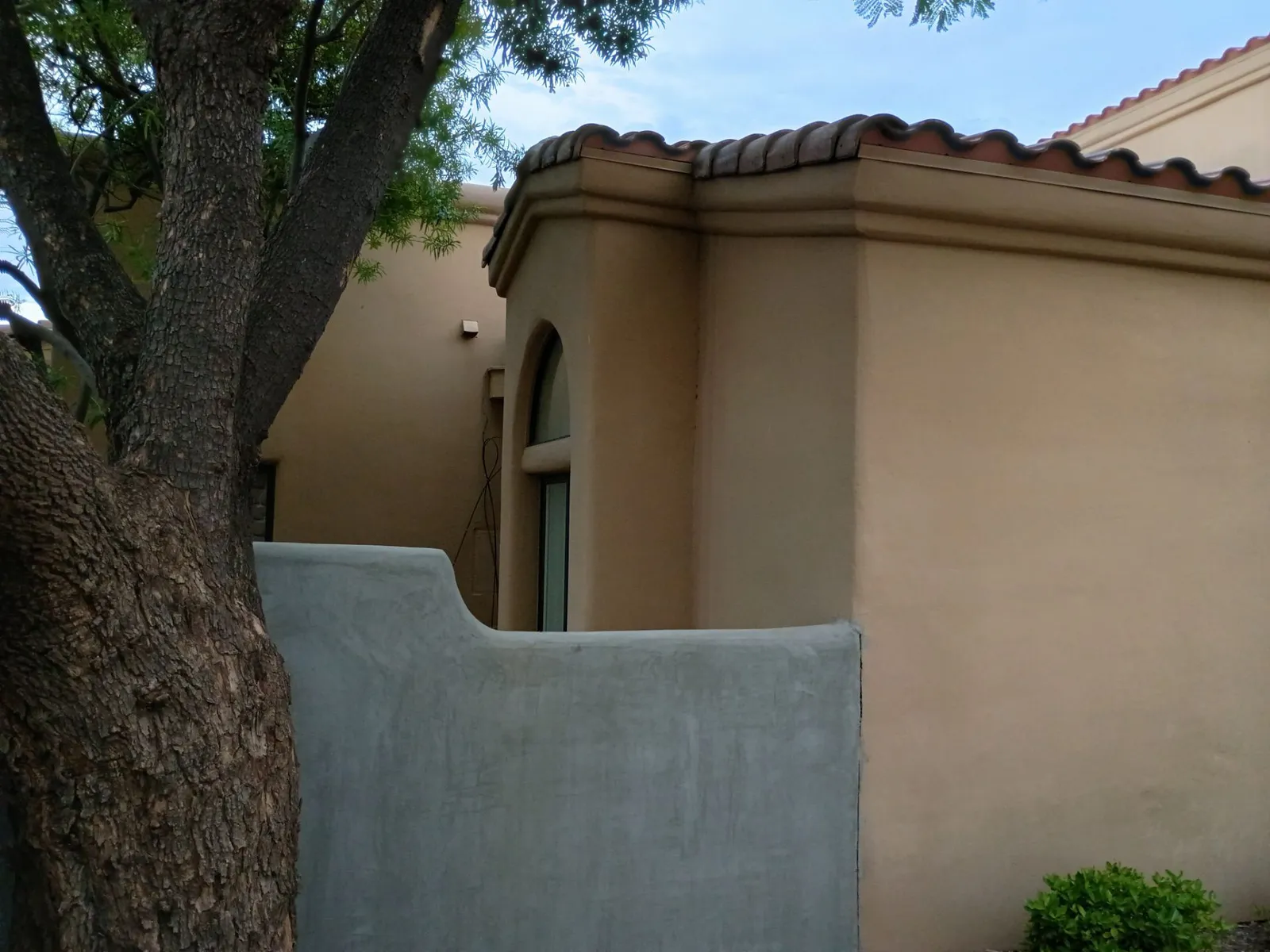
Paint that bubbles near the bottom of a stucco or block wall is almost always a water problem. Water from sprinklers, monsoon storms or wet soil soaks into the wall, carries salts out with it, and pushes the paint off from behind. The white, chalky crust you often see with it is called efflorescence on stucco.
Fix where the water comes from first. Then repair and repaint the wall. If you do it the other way around, the bubbles come back.
Why the bottom of the wall goes first
The base of a wall gets wet far more often than the rest of it. Sprinklers aimed at shrubs hit it. Rain splashes up off gravel and soil. Planters and piled dirt sit right against it and hold moisture.
Here's how two homeowners described it. One told us there was "a bunch of efflorescence going on from sprinklers that went awry, kind of, you know, bubbling up the paint." Another said the paint had come off "where the sprinklers have been hitting it" and there were "holes towards the bottom."
Monsoon season adds to it. The National Weather Service in Phoenix sets the official monsoon season as June 15 through September 30. After a wet stretch we hear things like: "with all this rain, we've noticed one little area on our front courtyard wall that the paint is bubbling."
What efflorescence on stucco is, and why it lifts paint
Stucco, mortar and concrete block all hold salts that dissolve in water. When water moves through the wall and dries at the surface, it leaves those salts behind as a white, powdery or crusty deposit. A National Institutes of Health facilities bulletin notes that persistent or repeated efflorescence may indicate too much moisture inside the masonry.
Under paint, the water and salts have nowhere to go. They lift the paint film into bubbles, and the bubbles crack and flake. One caller put it simply: "it started getting these, these huge bubbles and then they started cracking."
Signs it's water and salts, not just old paint
- White crust or powder on the wall, or on the ground right below it
- Bubbles that are worst near the ground, planters or sprinkler heads
- Bubbles that come back in the same spot after a touch-up
- Stucco that feels soft or sandy, or crumbles when you press it
What you can do yourself first
Most of the fix starts outside the wall. These steps cost little and tell you whether the problem is still active.
- 1Find the water. Run your sprinklers and watch where they land. Turn or swap any head that sprays the wall.
- 2Check what sits against the wall: planters, piled soil, or gravel that stays wet.
- 3Let the wall dry out. Wait for a dry stretch; the official monsoon season ends September 30.
- 4Wash off loose salt. The same NIH bulletin says efflorescence can be removed by gentle washing with water and warns against wire brushes. Go gently on soft stucco.
- 5Watch it for a few weeks. If the white crust comes back, water is still getting in.
Heads up
How the wall gets repaired before it's repainted
Once the water is under control, the damaged area has to come off before new paint goes on. On our jobs, stucco repair is part of the prep on every exterior painting project, and it follows the same order every time:
- 1Cut out the failure. Cracked and hollow stucco is ground back until only sound material is left.
- 2Build it back with a scratch coat, so the next layer bonds to it.
- 3Match the texture by hand to the wall around it.
- 4Prime the patch. Fresh stucco soaks up paint differently than the aged wall.
- 5Wash the whole wall to strip chalk, dust and loose material.
- 6Paint two dry coats, so the patch and the original stucco end up the same color, sheen and thickness.
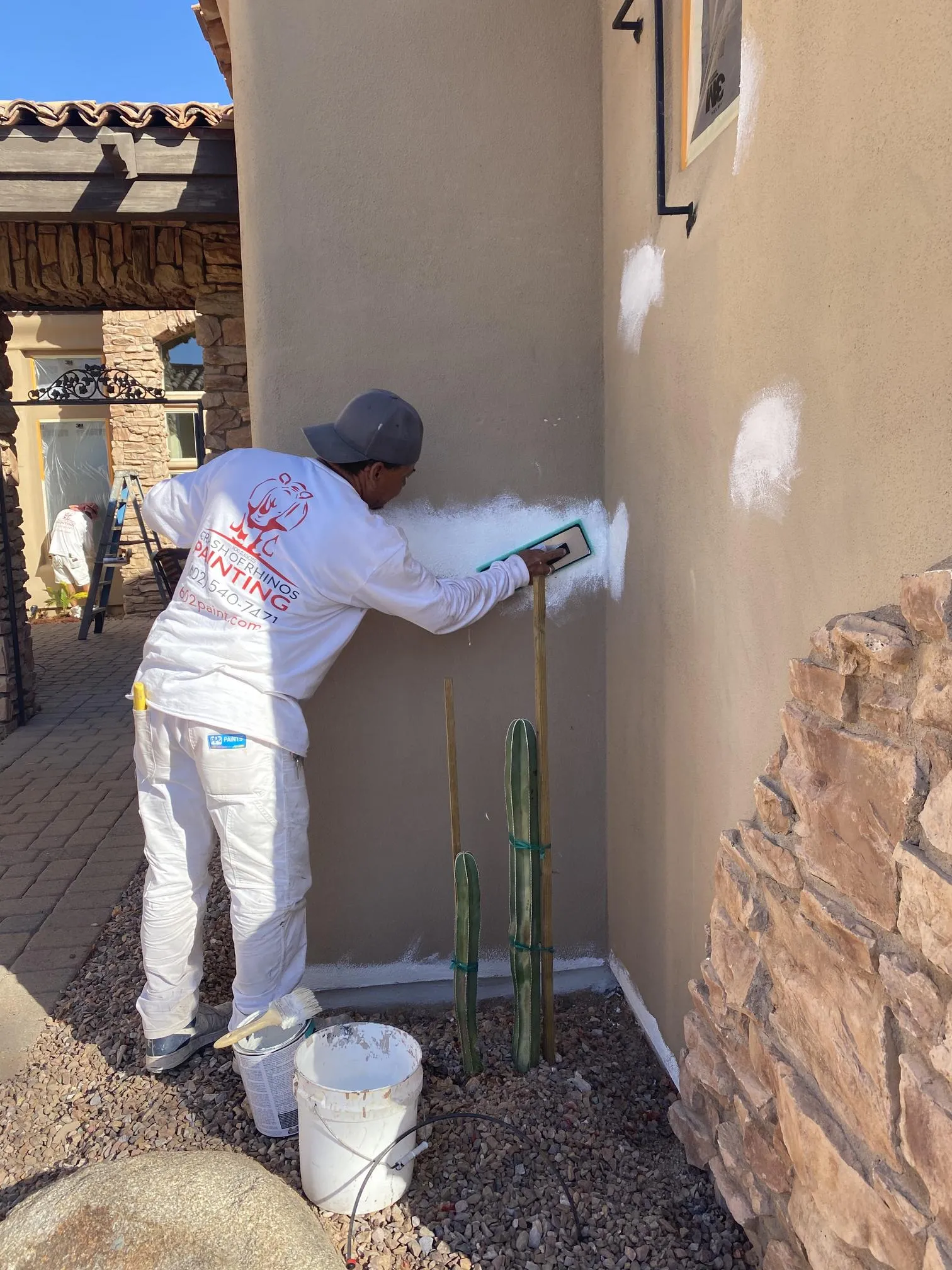
If the paint is peeling on the plain concrete band below the stucco, that's the stem wall, not the stucco. Stem walls get their own prep: our Crack & Repair Standard covers stem walls that are scraped, repaired, then waterproofed before paint.
When to call a painter
A small spot you can watch. Call when:
- The bubbling covers more than a small patch
- The stucco underneath is crumbling, soft or sounds hollow
- It keeps coming back after you've moved the sprinklers
- You're planning a repaint anyway and want it done once
For homes across Phoenix and the Valley, we'll walk the wall with you, show you every repair it needs, and put the price in writing on the spot, with no deposit. If paint is peeling elsewhere on the house too, our guide to peeling paint on stucco covers the other common causes.
Questions
Bubbling paint on your walls?
Call (602) 540-7471 or request a free proposal. We'll put the price in writing on the spot, with no deposit.
Written by
Mike Ricker
Mike Ricker writes for Crash of Rhinos Painting & Garage Floors, which has painted stucco homes across the Valley since 2006 with its own W-2 crews.